
A Travel Guide to Angkor Wat’s Stone Carvings: History, Meanings, and Tips

There is a specific moment when you step out of the glaring Cambodian sun and into the outer galleries of Angkor Wat that everything changes. The humid heat yields to cool, shaded sandstone, the chatter of crowds softens into a reverent hum, and suddenly, you are standing face-to-face with an entire universe carved into stone.
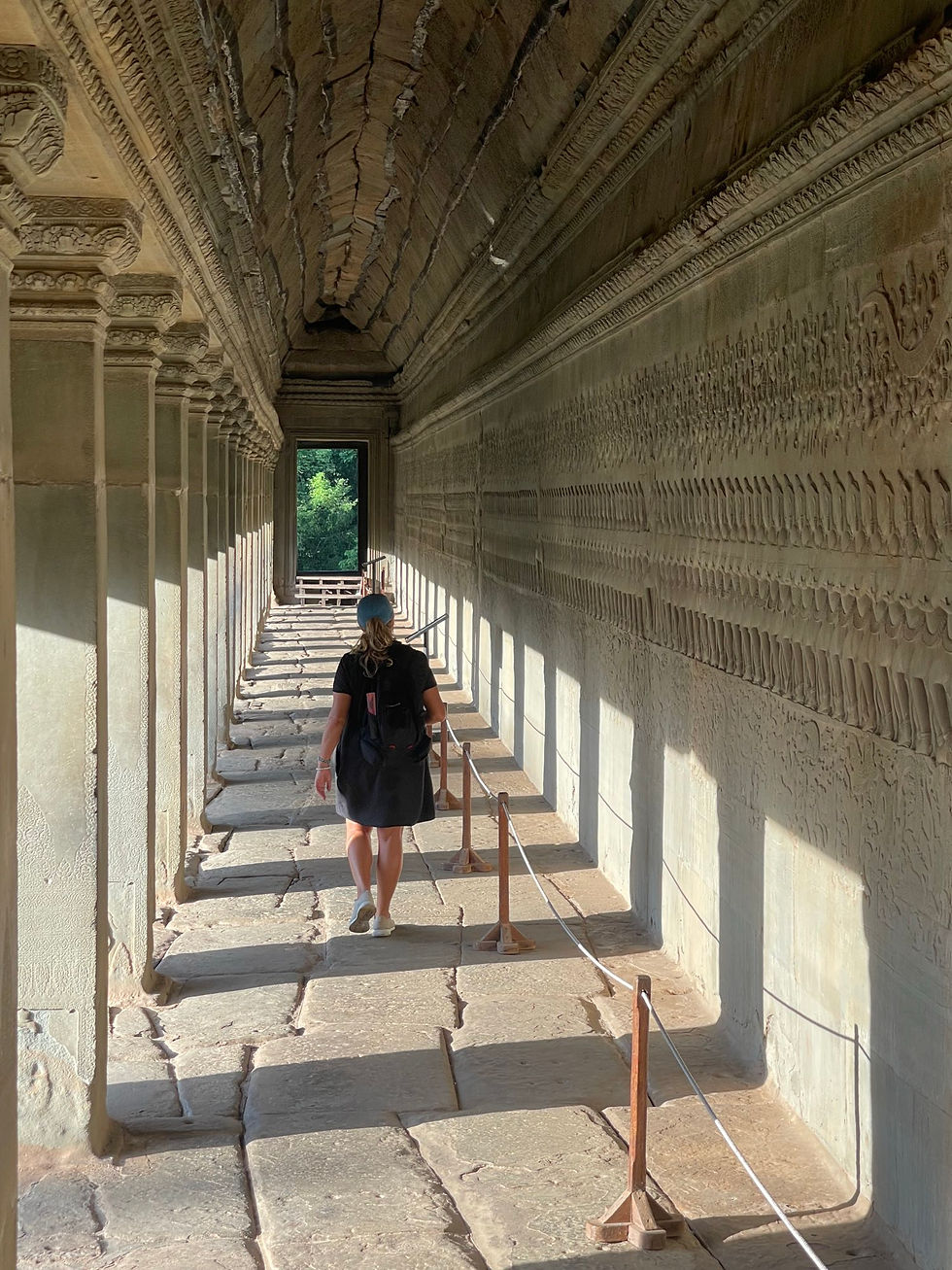
If you travel to tick a famous box, Angkor Wat is a breathtaking silhouette at sunrise. But if you travel to listen, the magic is found in its bas-reliefs (low-relief stone carvings). Running nearly a kilometer around the third enclosure of the temple, these are not just decorations; they are the ancient Khmer Empire’s living library, vibrant comic strips, and holy scriptures all wrapped into one.
When I ran my fingers along the smooth, cool sandstone, I wasn't just touching ancient art—I was stepping directly into a centuries-old story. Let's decode a few of the most incredible tales written in the stones of Angkor.
1. The Cosmic Tug-of-War: The Churning of the Ocean of Milk

Located in the East Gallery, this is arguably the crown jewel of Angkor’s reliefs, and standing before it is an overwhelming experience. The sheer scale is staggering—a massive, 49-meter panel bursting with rhythmic energy.
The scene depicts a famous Hindu creation myth: gods (*devas*) and demons (*asuras*) putting aside their eternal feud to work together. Their goal? To churn the cosmic ocean to release the *amrita*, the elixir of immortality.
As you trace the wall, you'll see **92 demons** on the left (distinguished by their fierce expressions and crested helmets) and **88 gods** on the right (looking calm and wearing conical headdresses). They are using the multi-headed serpent king, Vasuki, as a giant tug-of-war rope wrapped around Mount Mandara. In the center, the god Vishnu directs the cosmic operation, while underneath, a giant turtle holds up the mountain steady.
What to look closely for: Look below the churning line. The water is alive with thousands of meticulously carved fish, crocodiles, and sea monsters. Look even closer, and you'll see they are being violently chopped up by the spinning mountain a raw, chaotic detail that grounds the myth in a bizarre reality. High above them, beautiful celestial nymphs called *apsaras* are born from the sea foam, dancing gracefully through the air.

2. A Battle of Divine Proportions: The Ramayana
Moving along the walls, you inevitably step into the brutal, chaotic battle scenes from the *Ramayana* (known in Cambodia as the *Reamker*). Specifically, the Battle of Lanka in the Northwest Gallery hits you with an incredible sense of motion.

Unlike the structured rows of the Ocean of Milk, this panel is pure, unadulterated chaos. It documents the heroic prince Rama fighting the multi-armed demon king Ravana to rescue his kidnapped wife, Sita.
The sandstone practically vibrates with the energy of the monkey army (*vanaras*) as they clash with Ravana's demonic forces. Monks tear at demons with their bare teeth; warriors are thrown from chariots; figures collapse in agony.
What blew me away here was the individual emotion caught in the stone. Even in a sea of thousands of carved figures, no two faces are exactly alike. You can feel the desperation, the fury, and the absolute exhaustion of a war for the fate of the universe.
3. The Mirror of Mortals: Heaven, Earth, and Hell
Not all the stories are mythological. King Suryavarman II, the mastermind who ordered the construction of Angkor Wat in the early 12th century, made sure his own legacy was immortalized alongside the gods.

In the South Gallery, the panels shift from divine wars to human realities. You see the king himself, sitting high on his throne surrounded by parasols, sending his armies off to march.
But things get truly wild as the relief splits into three horizontal tiers representing the three realms of existence:

The Upper Tier: The wealthy, virtuous souls glided along in leisurely, beautiful palanquins, entering paradise, The Middle Tier: Ordinary humans going about their lives on Earth,The Lower Tier: A terrifying, unflinching look at the 32 chambers of Hindu hell.
The depictions of hell are gruesome enough to rival any medieval painting. If you look closely, you can see Yama (the judge of the dead) riding a water buffalo, pointing his staff to sentence souls to specific, ironic punishments. Gluttons are sawed in half; thieves are laid on beds of nails; those who damaged public property are trampled by wild beasts. It’s an ancient reminder that every choice carries weight—a message meant to keep the empire's subjects in absolute awe.

Tips for Your Own Decoding Journey
If you are planning to wander these corridors yourself, here are a few things I learned the hard way to help you get the most out of the experience:
Go with the Sun: Angkor Wat is oriented to the west (unlike most Khmer temples which face east), meaning it is dedicated to Vishnu and possibly built as a funerary monument. To follow the narrative sequence correctly, **walk counter-clockwise** through the galleries (a practice known as *prasavya*, associated with ancient rituals for the dead).
* **Timing is Everything:** Hit the outer galleries in the late afternoon. The low-angled golden light streams directly through the columns, illuminating the depths of the carvings and making the figures appear three-dimensional.
* **Bring a Small Flashlight:** Some of the most intricate details (and ancient hidden paint pigments) are tucked away in darker corners or higher registers that the sun can't quite reach.
When you walk past these walls slowly, you realize that Angkor Wat isn't just an architectural marvel. It’s a stone tapestry of human imagination, political ambition, and profound spiritual faith. Decades from now, the towers will still stand, but it's the stories in the stone that stay with you long after you fly home.
Gear Up for Your Adventure
*Planning your trip to Siem Reap? Here is the travel gear I never leave home without:*
* Keep your water ice-cold for 24 hours in the Cambodian heat with my absolute favorite Hydro Flask Wide Mouth Bottle.
* Capture every single stone detail without the bulk using the Sony Alpha 7 IV Mirrorless Camera—perfect for low-light gallery shots.
* Read up on the myths before you go with the definitive guide: *Angkor: An Introduction to the Temples* by Dawn Rooney.


Comments