

The Overwhelm Cure: A Step-by-Step Checklist for Planning Any Trip from Scratch
Have you ever opened a dozen browser tabs to plan a vacation, only to close them all an hour later feeling more anxious than before you started?
You are not alone. In fact, modern travel data shows that while an increasing number of independent travelers are using AI itinerary generators to save time, nearly 25% report encountering inaccurate information, and a staggering majority still struggle to turn a chaotic mess of pinned locations into a real, functional itinerary.
Between endless scrolling on social media, conflicting blog reviews, and the dread of missing out on the "perfect" spot, travel planning has transformed from an exciting pre-trip ritual into a source of decision paralysis.
Fortunately, you don't need a high-priced travel agent to cut through the noise. What you need is a structured, repeatable system. This definitive *travel planning checklist**is designed to eliminate the anxiety of starting from square one. By breaking your trip into logical, sequential phases, you can confidently build a custom itinerary from scratch without losing your sanity.

The Strategic Travel Planning Blueprint
To ensure you don't miss a single step, map out your journey using this sequential, phase-by-phase checklist.
1. Phase 1: Define the Core Foundation
Establish the framework
Set your realistic trip budget, select a destination that aligns with your financial baseline, and lock in your firm travel dates.
2. Phase 2: Secure Logistics & Transit
Lock in baseline bookings
Apply for necessary visas, purchase your main transit flights, and buy a reliable travel insurance policy before booking non-refundable elements.
3. Phase 3: Craft the Micro-Itinerary
Map out the days
Geolocate your anchor attractions on a digital map, anchor them to specific days to minimize transit, and reserve high-demand lodging.
4. Phase 4: Final Preparations
Pre-departure checks
Set up local data via an international eSIM, finalize packing lists based on specific activities, and distribute your final itinerary copies.

Phase 1: Define the Core Foundation (The "Big Three")
Every memorable trip starts with clear boundaries. Before you look at a single hotel pool or trendy restaurant, you must lock down your budget, your destination, and your timeline.
1. Establish Your Realistic Travel Budget
The most common mistake travelers make is picking a destination first and trying to force a budget onto it later. Instead, flip the equation. Determine your total financial comfort zone.
Break your total budget down into distinct categories:
* **Fixed Logistics:** Flights, major train passes, and visas.
* **Daily Base Costs:** Accommodations and intra-city transportation.
* **Variable Lifestyle Costs:** Food (casual vs. fine dining), activities, tours, and emergency buffers.
*Pro Tip:* Always allocate a 10% cash buffer directly into your budget for hidden expenses like sudden baggage fees, local tourist taxes, or emergency rideshare trips.
2. Match Your Destination to Your Capital
Once you have an honest budget, choose a destination where your money will work for you, not against you. If your total budget is $2,000, a luxury week in Tokyo might leave you stressed about every meal. That same $2,000 could buy you a month of high-end experiences across Southeast Asia or Eastern Europe.
Research the **Cost of Living Index** for travelers in your target region to ensure your daily allowance matches local realities.
3. Factor in Seasonality and Timeline
Your calendar dictates more than just the weather; it directly influences your overall trip costs and crowd density.
* **Peak Season:** Perfect weather, but expects maximum price markups on accommodations and long lines at primary sights.
* **Off-Peak Season:** Deep discounts, but you risk closed attractions or undesirable weather (e.g., monsoon seasons or extreme winter closures).
* **Shoulder Season:** The golden window. Typically falling just before or after summer and major holidays, shoulder season offers a balanced compromise of mild weather and reduced crowds.
## Phase 2: Secure Major Logistics & Entry Requirements
With your foundation set, it is time to handle the non-negotiable legal and transit requirements. Do not book accommodations until you have checked off this phase.
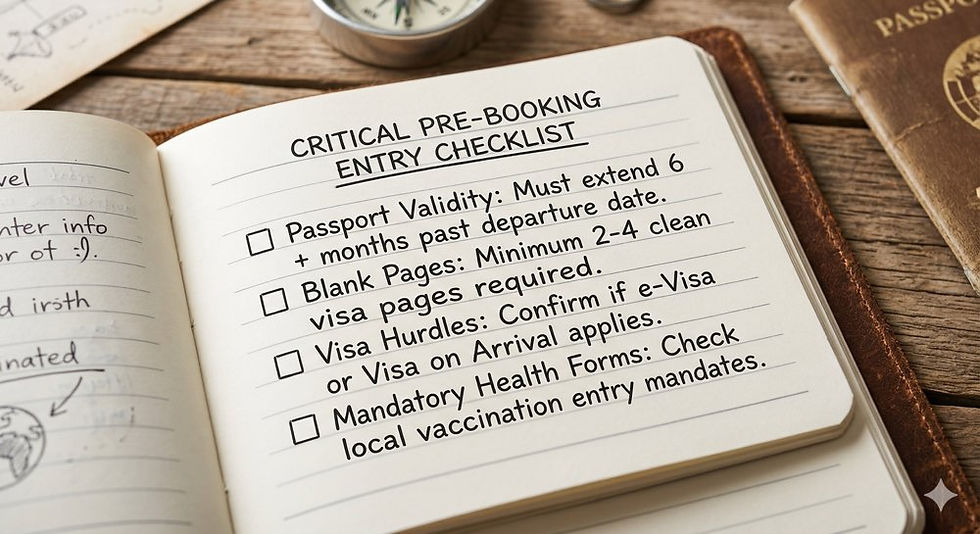
1. Verify Passport and Visa Rules
Nothing cancels a vacation faster than being turned away at the airport gate. Ensure your passport is valid for **at least six months** beyond your planned return date. Many countries strictly enforce this rule.
Next, check the official embassy website of your destination to see if you require a traditional visa, an e-Visa, or an electronic travel authorization (like ETAS or ETIAS).
2. Lock In Long-Haul Flights
Flight pricing is highly dynamic. To find the absolute best rates without spending hours tracking tickers manually, use comprehensive search aggregators. Look for tools that allow you to view flexible date grids so you can spot if shifting your departure by a day or two saves hundreds of dollars.
Money-Saving Strategy: When searching for flights, use search engines to aggregate options, but **always book directly with the airline**. If a flight is canceled or delayed, third-party booking agencies often leave you stranded in customer service loops, whereas airlines handle direct ticket holders first.
3. Secure Comprehensive Travel Insurance
If you can't afford travel insurance, you can't afford to travel. A comprehensive policy protects you from sudden flight cancellations, lost baggage, and catastrophic medical bills overseas. Ensure your policy covers emergency medical evacuation, especially if you are heading to remote areas or engaging in adventure sports.
## Phase 3: Craft Your Micro-Itinerary (Without Over-Scheduling)
This is the phase where most independent travelers stumble into severe burn-out. The goal of an **independent travel itinerary** is not to fill every single hour of your day with a mandatory activity. It is to create a fluid structure that guides your days while leaving room for spontaneous discovery.

1. Map Out Your "Anchor" Sights
Start by compiling a messy list of everything you might want to see. Then, open a digital mapping tool (like Google My Maps) and drop a pin on every single location.
Visualizing your sights on a map will immediately reveal natural geographic clusters. Grouping your sights into geographic zones ensures you won't spend half your vacation sitting in city traffic traversing from east to west.
2. Apply the "One Anchor per Day" Rule
To combat vacation exhaustion, structure your days around **one primary anchor activity** (e.g., a morning tour of the Colosseum or a museum visit). Leave your afternoons open for flexible exploration, cafe-sitting, or neighborhood walking tours. If your schedule is packed tight from 8:00 AM to 10:00 PM, you aren't traveling—you are managing a shift.
### 3. Book Accommodations Strategically
Now that you know where your main anchor sights are located on your map, look for accommodations situated centrally to those clusters or immediately adjacent to a major public transit line.

Phase 4: Final Preparations & Smooth Arrival Logistics
The last 72 hours before your trip are all about mitigating friction. Use this final checklist segment to ensure a seamless arrival at your destination.
1. Seamless Connectivity: Setup an eSIM
Do not waste your first hour in a new country hunting for local airport SIM card kiosks or risking massive international roaming fees on your primary carrier. Instead, download a digital eSIM app prior to departure. You can buy a regional data package instantly, install it on your phone, and activate it the second your flight touches down.
2. Establish Your Arrival Plan
The absolute highest point of travel stress occurs between exiting the airport arrivals gate and finding your hotel bed. Eliminate this friction entirely by writing down an explicit arrival plan before you lose cellular service mid-flight. Know exactly which official taxi line to join, which train route to take, or whether your hotel offers a dedicated shuttle service.
The Ultimate Master Travel Checklist (Summary Copy)
Print this out or save it to your favorite notes app to track your progress step by step:

By approaching your next getaway systematically, you can entirely bypass the planning anxiety that plagues so many independent travelers. Stop staring at the blank page and start checking off your boxes. Your next adventure is waiting.
## Resources & Recommended Booking Tools
To make your trip planning as smooth as possible, we highly recommend utilizing these trusted industry tools. Booking through these links helps support our site at no extra cost to you!
* **Find Best Value Accommodations:** Secure the perfect stay near your anchor sights using the global listings on kook accommodation
* **Compare Global Flight Options:** Track airfare price trends across hundreds of airlines instantly on Skyscanner.
* **Book Curated Tours & Top Activities:** Skip the long ticket lines and secure verified local guided tours through Viator or GetYourGuide.
* **Protect Your Journey:** Never leave home uninsured. Get a quick, customizable travel insurance quote tailored to your trip itinerary via World Nomads.


Comments