
Beyond the Ancient Stones: A Deep Jungle Trek to Kulen Mountain Roaring Waterfalls

There is a side of Cambodia that never makes it into the glossy travel brochures. Beyond the iconic, symmetrical towers of Angkor Wat and the tuk-tuk-filled streets of Siem Reap lies a ancient, untamed wilderness that feels entirely untouched by time.
Rising dramatically out of the surrounding flat agricultural plains, about two hours north of the city, is Phnom Kulen, a massive, forest-capped sandstone plateau known to locals simply as the Sacred Mountain.
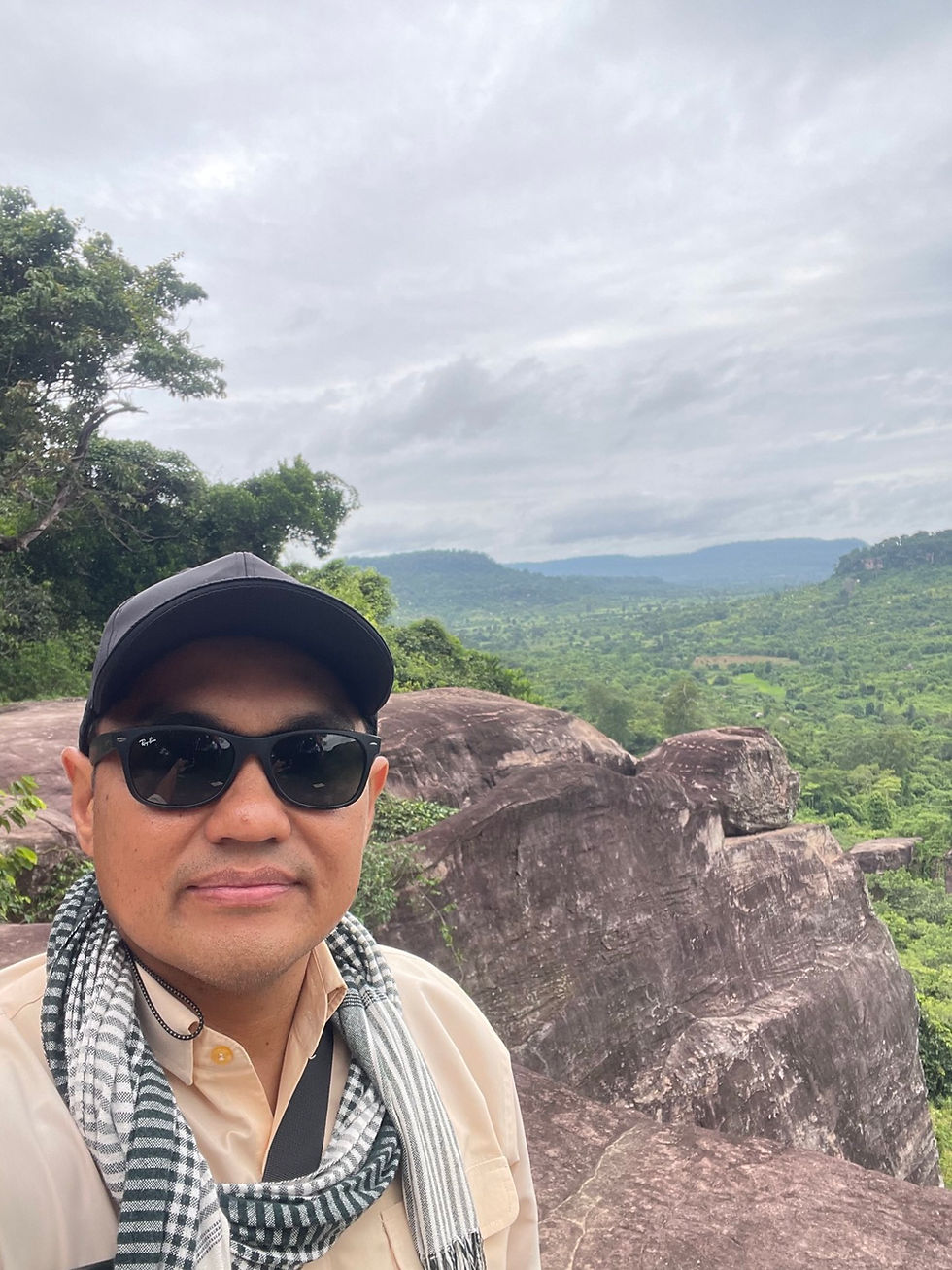
To most day-trippers, Kulen Mountain is a place for a quick photo stop, a brief visit to a reclining Buddha, and a dip in a crowded pool. But if you trade the air-conditioned vans for a pair of sturdy trail boots, strap on a lightweight pack, and step onto the hidden trails winding through the jungle canopy, Kulen reveals itself as something far more raw: an adrenaline-pumping, mud-splattered, sweat-soaked wilderness adventure through lost history and roaring waterfalls.

This is the story of trekking deep into the sacred jungle of Phnom Kulen, pushing past the tourist boundaries to discover stone monoliths forgotten by centuries, sacred carved riverbeds, and the thunderous heart of Cambodia's wild waters.
The Call of the Sacred Plateau
The day began long before the sun had a chance to break through the thick horizon. At 5:00 AM, Siem Reap was still asleep, bathed in a deep indigo haze. As our transport rattled along the quiet country roads heading north, the urban landscape quickly dissolved into rustic villages, palm tree silhouettes, and wide-open rice fields shrouded in morning fog.
Phnom Kulen holds a legendary place in Khmer history. In 802 AD, King Jayavarman II stood on this very plateau and performed a sacred ritual to declare independence from Java, unifying the warring regional factions and establishing the immortal Khmer Empire. Before there was Angkor Wat, before there was Bayon or Ta Prohm, there was Kulen ”the cradle of a civilization.

Yet, as our vehicle pulled up near the base of the mountain trail, history felt secondary to the immediate, visceral presence of the jungle. The mountain loomed above us like a dense green fortress. The morning air was heavy with moisture, rich with the smell of wet earth, damp moss, and wild rain-soaked leaves. We checked our hydration bladders, tied our laces tight, and stepped off the gravel access path straight onto a narrow red clay trail that vanished immediately into the towering emerald canopy.
Stepping Into the Deep Canopy
The moment you cross the threshold from open dirt road to deep jungle, the atmosphere changes instantly. The morning sun, which had been warming up the countryside, was suddenly blocked out by a thick ceiling of tropical hardwood trees, ancient banyan trees, and towering bamboo groves. In its place, thin shafts of golden light pierced through the canopy, illuminating swarming clouds of tiny forest insects and dancing dust motes.
The trek began with a steep, punishing incline. The red dirt of Kulen Mountain is notorious; when dry, it’s a powdery dust that sticks to your skin, but after a fresh rainfall, it turns into a slick, clay-like slurry that tests every ounce of your balance. My lungs burned as we scrambled over wet sandstone ledges, using twisted forest vines as improvised handholds to haul ourselves up the steeper ridge sections.
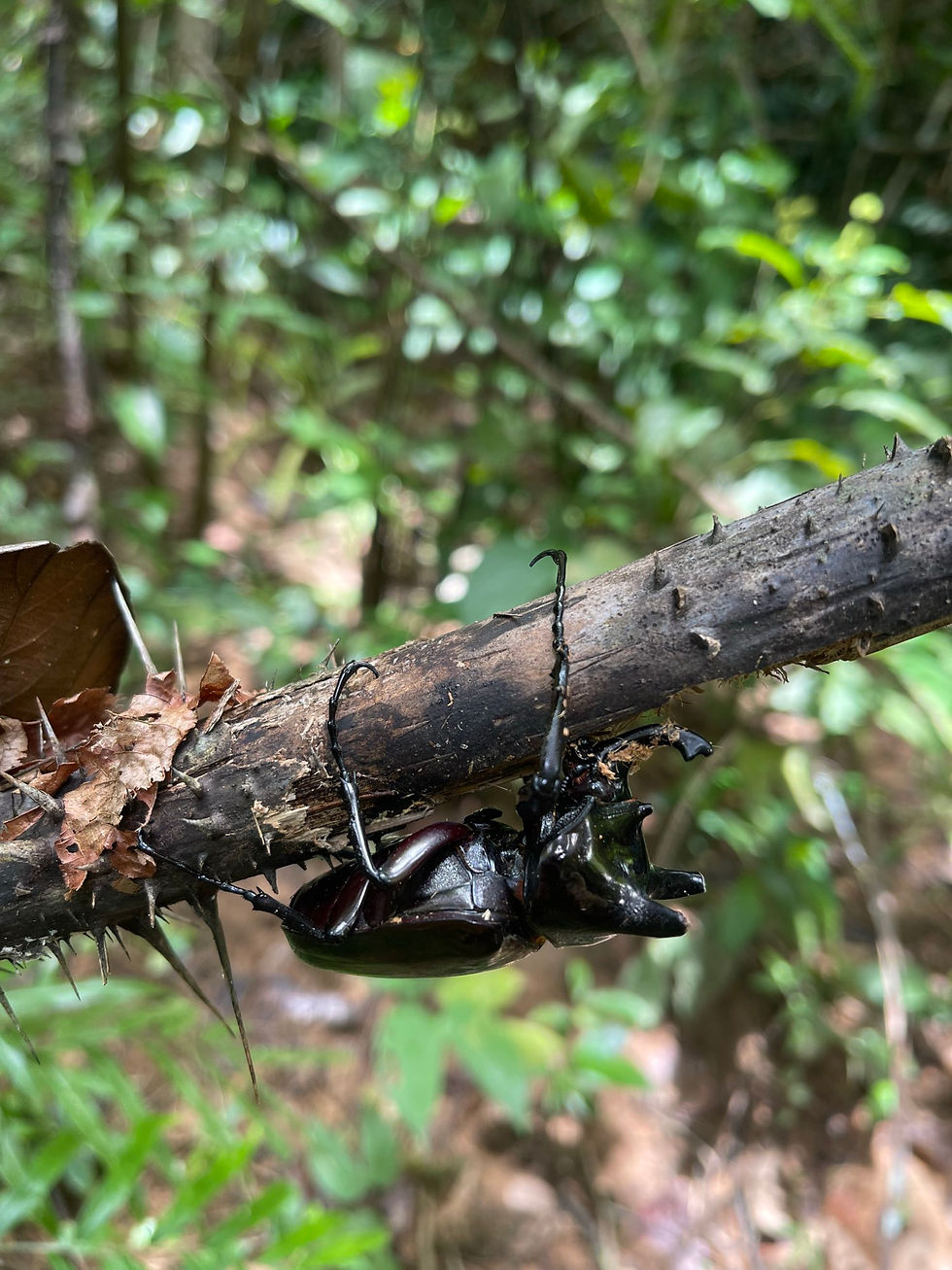
The jungle sounds were deafening continuous, rhythmic symphony of buzzing cicadas, distant hornbills calling across the canyon, and the steady, heavy crunch of our boots pressing into centuries of leaf litter. Humidity clung to us like a heavy blanket. Within twenty minutes, my shirt was completely soaked with sweat, and water trickled down my forehead, stinging my eyes. But there was an undeniable thrill to it. This wasn't a manicured park trail with boardwalks and handrails. This was raw, untamed terrain where every step required focus.
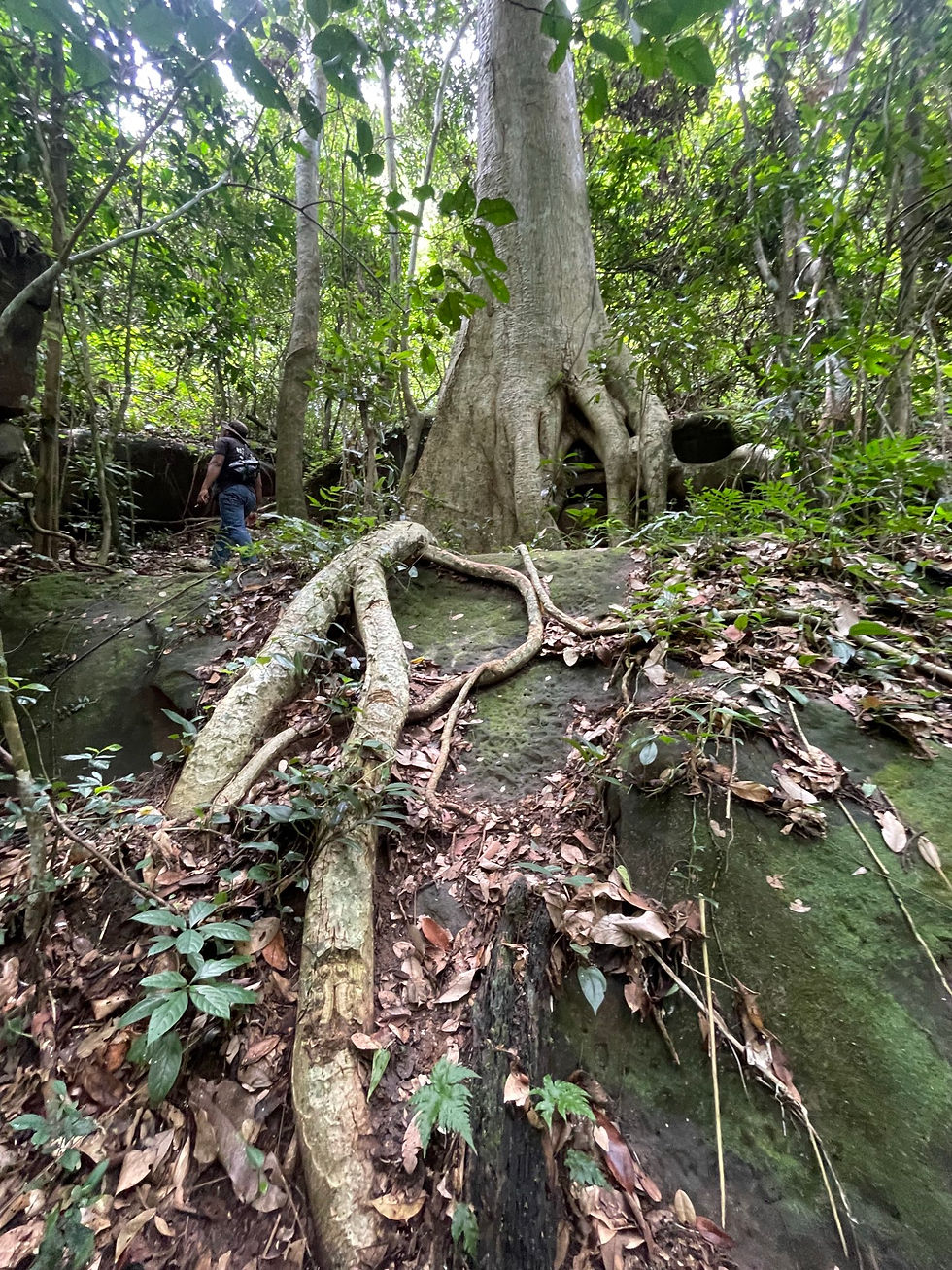
We navigated around massive tree roots that coiled across the path like sleeping python snakes, ducked beneath thorny rattan vines, and hopped across muddy rivulets carving their way down the hillside.
Forgotten Guardians: The Hunt for Srah Damrei
While most tourists stick strictly to the main paved loop near the top of the plateau, our trail pushed deeper toward the isolated southern sectors of the mountain range. Our objective was Srah Damrei, the "Elephant Pond, one of the most mysterious and isolated archaeological sites in all of Cambodia.
Reaching Srah Damrei is an exercise in endurance. The trail thinned out until it was little more than a hunter's track, overgrown with waist-high ferns and thick brush. The heat under the dense canopy felt suffocating, but the sense of anticipation kept our feet moving forward.
After nearly two hours of relentless trekking through the tangled forest, the jungle suddenly opened up into a quiet, shadowed clearing surrounded by towering sandstone cliffs.
And there, standing silent and majestic in the green gloom, was a sight that took whatever breath I had left away.
Rising out of the forest floor was a massive, life-sized elephant carved entirely out of a single, colossal sandstone boulder over a thousand years ago. Standing nearly four meters tall, the sculpture looked impossibly grand. Flanked by ancient stone lions and lesser animal guardians, the monolith was covered in patches of pale green lichen and velvety moss, seamlessly integrated into the living jungle.
Standing before Srah Damrei felt like stepping directly into an Indiana Jones film. There were no velvet ropes, no noise, no vendors selling trinkets, and not another human soul in sight. Just an ancient Khmer masterwork, carved in the 8th or 9th century, standing guard in total jungle solitude. We sat down on a smooth sandstone rock nearby, taking long gulps of water, completely mesmerized by the silent power of the place. It was a stark, humbling reminder of how nature eventually reclaims even the greatest empires, swallowing stone and history whole.
Following the River of a Thousand Lingas
Leaving the elephant monoliths behind, our route looped back toward the central plateau, following the natural contours of the mountain's river systems. The air began to cool slightly as we approached running water, and soon the sound of bubbling streams replaced the dry rustle of the jungle canopy.
We broke through the trees alongside the headwaters of the Siem Reap River. Here, in the shallow, sunlit waters of the riverbed, lies one of Kulen most sacred secrets: Kbal Spean, the River of a Thousand Lingas.

I knelt at the edge of the river, dipping my hands into the crystal-clear, surprisingly cold spring water to splash my face. Looking down through the shimmering surface, the sandstone riverbed came alive with intricate detail. Centimeter by centimeter, ancient artisans had chiseled thousands of sacred Hindu lingas (phallic symbols representing the god Shiva) directly into the rock floor over which the river flows. Alongside the lingas were elaborate carvings of Lord Vishnu reclining on the cosmic serpent Ananta, Brahma rising from a lotus, and sacred bulls.
The spiritual logic behind this 1,000-year-old engineering marvel is breathtaking in its scale. Ancient Khmer kings believed that as the mountain water flowed over these sacred carvings, it became holy water, spiritually charged and blessed before flowing down the slopes to nourish the rice paddies and sustain the millions of citizens living in the great capital of Angkor below.
We hiked alongside the river for over a mile, watching the water ripple over ancient gods and sacred geometric patterns carved directly into the earth. It was a surreal blending of nature, spirituality, and art—a river that literally carries history in its current.
The Roar in the Distance: Reaching Kulen Waterfall
By early afternoon, after miles of arduous hiking, scrambling over rock scrambles, and navigating muddy forest tracks, our legs were heavy, and our energy was flagging. But then, a new sound began to echo through the trees.
It started as a low, thunderous rumble—a deep vibration you felt in your chest before you could fully hear it with your ears. As we pushed forward, the sound grew louder, swallowing the noise of the forest. The air around us transformed, becoming visibly mistier and deliciously cool against our overheated skin.
We scrambled down a steep, root-choked embankment, pushed aside a thick screen of wild banana leaves, and stepped out onto a rocky ledge overlooking the ravine.
There it was: Kulen Waterfall in all its wild, cascading glory.
The waterfall drops in two massive tiers. The upper tier is a gentle, broad cascade that spills over smooth sandstone rocks into a shallow basin. But the lower tier—the true crown jewel of the mountain—is a dramatic, raging torrent where the river leaps off a sheer cliff face, plunging over 15 meters into a massive, dark emerald pool below. The force of the falling water generates a powerful downdraft, sending clouds of white mist billowing across the canyon and coating the surrounding jungle trees in a perpetual dew.
Without hesitation, we shed our heavy backpacks, unlaced our muddy boots, and made our way down the wet timber steps toward the edge of the plunge pool.
Stepping into the water was an instant shock to the system. After hours of battling tropical jungle heat and humidity, the mountain spring water felt ice-cold and utterly intoxicating. I plunged under the surface, feeling the water wash away hours of red dust, sweat, and physical fatigue.
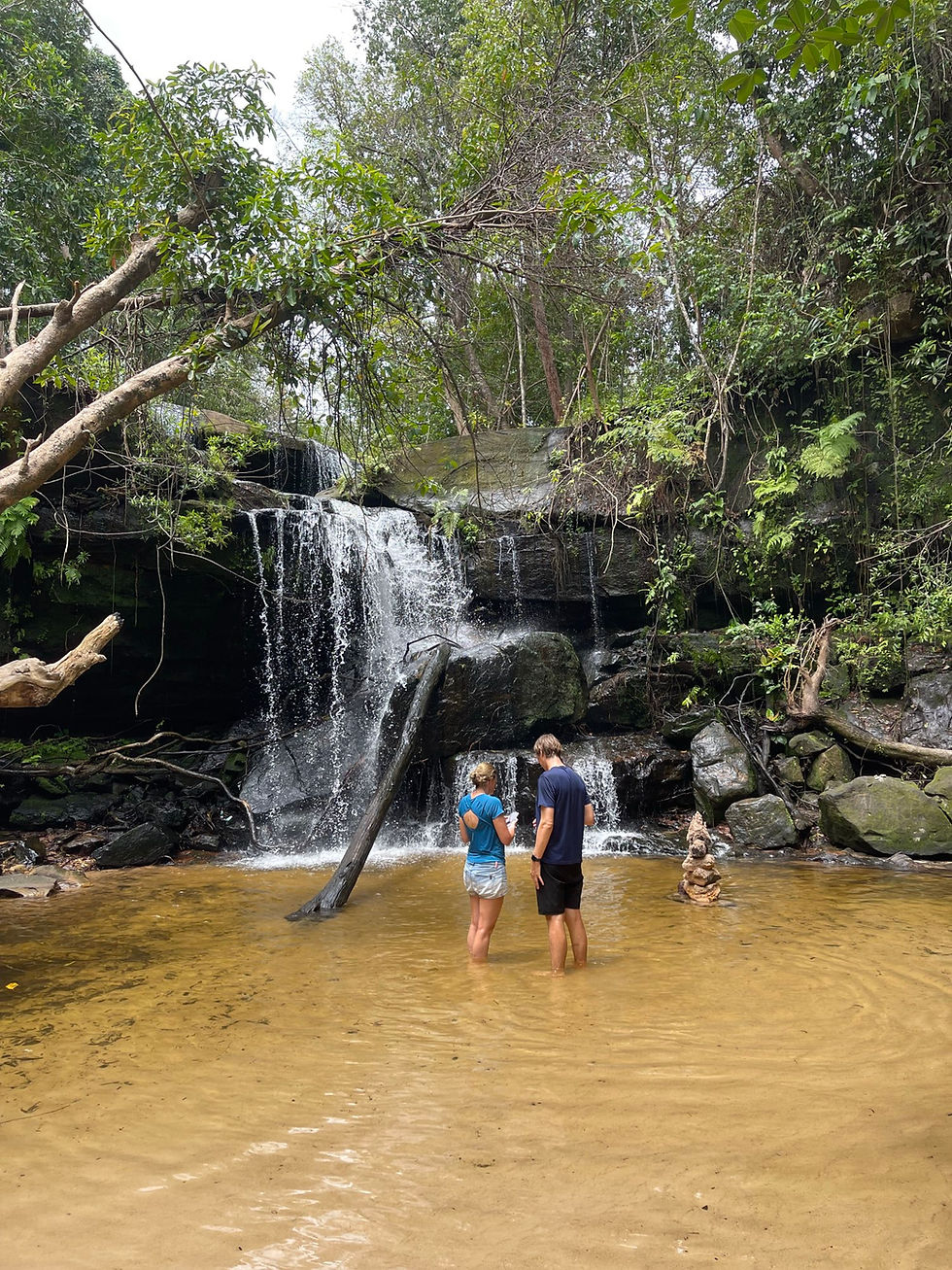
Swimming out toward the center of the natural pool, the power of the waterfall became overwhelming. The roar was deafening, spraying mist into our faces and churning the surface into white foam. I floated on my back in the middle of the natural amphitheater, looking up through the mist at the towering jungle canopy framing the clear blue sky above. It was the ultimate payoff a moment of pure, unadulterated euphoria that only comes after pushing your body through miles of tough terrain to reach a wild destination under your own power.
Essential Gear & Tips for Trekking Phnom Kulen
If you inspired to leave the standard tour buses behind and tackle the deep jungle trails of Kulen Mountain yourself, proper preparation is key.
This isn't a casual stroll; it is a legitimate tropical trek that requires respect for the environment.
When to Go: The time of year dramatically changes the experience. The wet season (May to October) brings lush green foliage and maximum water volume to the waterfalls, but the trails can turn into slick, muddy slides. The dry season (November to April) offers clear trails and easier trekking, though the waterfalls are less dramatic and the river levels drop.
Hire a Local Guide: Do not attempt to trek deep into Kulen's back-country alone. Many of the trails leading to remote sites like Srah Damrei are unmapped, heavily overgrown, and cut through active local farmland or protected park zones. A local guide not only keeps you safe and on track, but also provides invaluable insights into the history, local flora, and spiritual customs of the mountain.
Proper Footwear: The terrain on Kulen ranges from loose sand and sticky red clay to slippery wet river sandstone. Regular sneakers or flip-flops will ruin your day. For a trek like this, you need breathable, quick-drying footwear with aggressive rubber lugs that can handle mud and rock alike. During this trek, my feet stayed completely blister-free.
Hydration and Protection: Bring at least 2 to 3 liters of water, electrolyte packets to replace lost salts, high-SPF eco-friendly sunscreen, and strong insect repellent. Pack everything in a lightweight waterproof dry-bag or use a rain cover for your backpack.
The Unforgettable Wild Heart of Cambodia
As the late afternoon sun began to cast long, golden shadows across the jungle floor, we packed up our gear and began the trek back toward the mountain rim. My muscles were sore, my knees ached from the steep descents, and my socks were still damp from the plunge pool but my spirit felt entirely renewed.
Most visitors leave Cambodia having seen the grand, manicured stone temples of the ancient kings, marveling at what human hands built centuries ago. But on Phnom Kulen, you experience the raw, pulsing heart of the environment that birthed those kings in the first place.
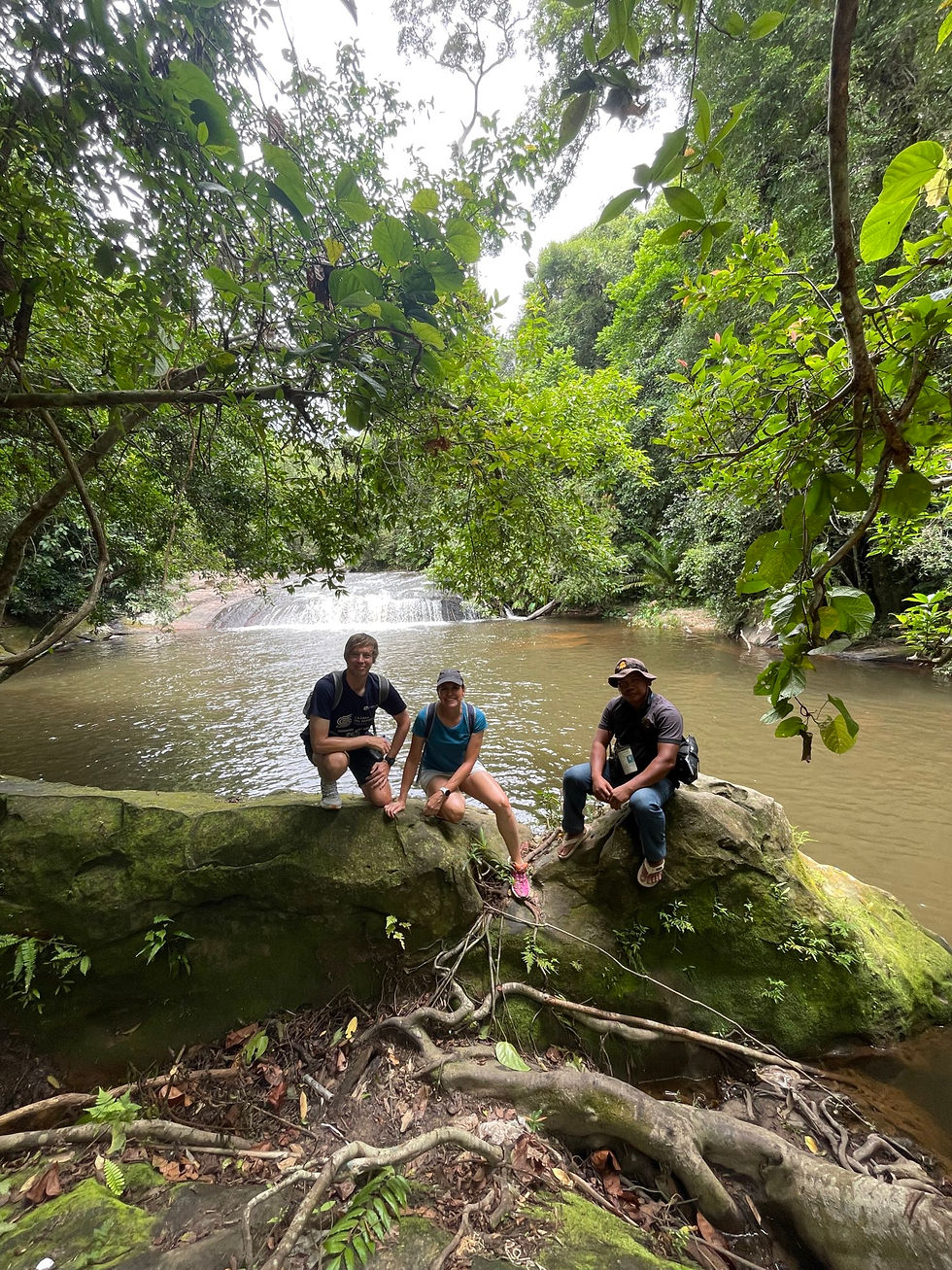
It is a place where history isn't locked behind glass or fenced off by velvet ropes. It lives in the moss creeping over thousand-year-old stone elephants, in the holy water flowing over carved riverbeds, and in the thunderous spray of jungle waterfalls echoing through the canopy. If you ever find yourself in Siem Reap, do yourself a favor: step off the beaten path, embrace the sweat and the mud, and take the trek into the deep wild of Kulen Mountain. You'll never look at Cambodia the same way again.
Check out our short trekking video on tik tok here: https://vt.tiktok.com/ZS4qB6q9U/


Comments